I’m actually enjoying writing again.
I’m happy to say that writing is coming along really well these days. It feels good to have the creative wind at my back again. I credit this to my son, Eric, who has picked up the reins and is helping me with his deaf brother. I didn’t realize that having to do so much with him on my own was taking a toll on my creativity.
What I’m working on.
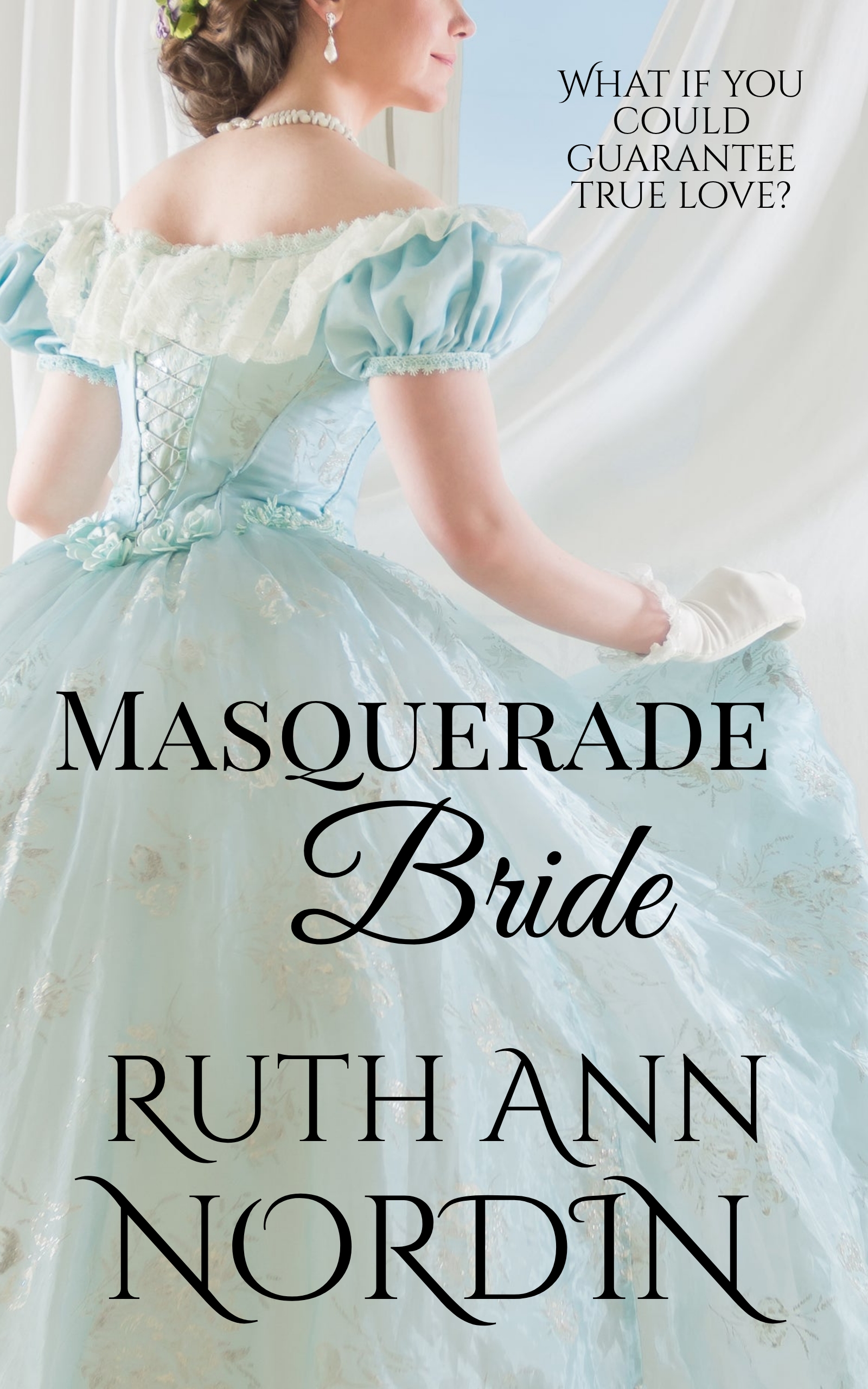
I am hopeful that I will get four books out this year. I just published Masquerade Bride. I’m on track to publish The Preacher’s Wife on June 29. (It’s being edited as we speak.) I’m in the last 1/4 of The Science of Love (Book 2 in the Marriage by Chemistry Series). I am coming up to the halfway point in Love Me, Love Me Not (Book 1 in The Marriage Mart Series), and I believe I can make this a novella as long as I keep the plot on point. I have started The Old Maid (Book 3 in the Oregon Series. It comes after The Preacher’s Wife.)
I have put my horror romance on hold. I lost interest in writing the story as soon as I got to the horror part. I know. It’s ironic that I enjoy reading horror, but writing it isn’t so interesting to me. I’d rather write the romance. I might finish this book someday, or I might just let it go. Only time will tell.
Getting back to reading indie books.
I fizzled out on the big traditionally published books at the library because after a few months of reading them, every audiobook I was coming across sounded so much like what I’ve already read. So I am back to looking through indie books again. I rely on Red Feather Romance (romance only) and Bargain Booksy (multiple genres) to find new authors. Thanks to Karen J. Mossman, I learned that I can listen to books on my iPhone by using the Alexa app. It’s robotic, though, and after a while, I do get a headache, so I can’t listen to it for a long period of time. I miss the days when I could physically read books, but we deal with what we have. I understand the frustration human narrators feel when authors choose to use digital narration to get their books in audio, but most indie authors can’t afford to pay someone to narrate the books. For readers like me, we rely on audio. I will listen to books using Alexa, but it’s easier on my ears to listen to the digital narration retailers are offering indie authors. I don’t get headaches on the retailer digital narration. Indie books offer the best variety. There’s not enough of these books in audio.
Stuff in the romance genre I don’t understand.
Going through the daily emails to look for new authors, I have noticed a lot of romance books feature two tropes that has me wondering, “Why is this popular?” I would say that over half of the books I’m coming across have these in them.
1. The billionaire hero. Why does he need to be a billionaire? Since when is a millionaire not enough? I get how women love the security of man with money, but this is just excessive to me. What can a billionaire do that a millionaire can’t? Why not make this guy a trillionaire? I wonder if trillionaires will be the next big trend. Why settle for owning huge corporations when your hero can rule countries or even several regions of the world instead? Personally, I prefer my romances to be more within the realm of possibility. Just give me a man who works hard and can pay the bills. He still provides, and better yet, he’s not as likely to run off to his mistresses behind my back. Loyalty is key to a happy marriage, and that is ultimately what romance should be about.
2. The grumpy hero (or even the grumpy heroine). How is this type of character desirable? I have been around grumpy people. They are miserable to be around. All they do is complain. They can be given the perfect day and find something wrong with it. Over time, all these people do is drag you down with them. You start off optimistic and excited about the world, but after some time with these people, you find that enthusiasm for life slowly draining out of you. I have yet to see a real-life example of a sun-shiny person bringing the grumpy one up. It’s always been the other way around. Grumpy people are toxic. Why not just have an average, well-adjusted character who is searching for love? Your average person can experience pain and grief just like a grumpy person. It’s okay to show that side of things. The difference is they don’t live in that state day-after-day. They have their happy moments, too.
Stuff I love to read in horror stories.
Speaking of “grumpy”, I noticed I was ragging on stuff I didn’t like in the horror genre in a couple of posts I’ve done on this blog. Today, I thought I’d mention the tropes I do love.
1. I love it when the book opens with a prologue showing that someone or something has ruined someone’s life. We see a terrible ending for this very first character that shows up on the page. This is a wonderful use of foreshadowing. Without coming out and telling the reader that danger lies ahead for our main character, the reader is shown that they are about to face a harrowing experience. For me, this setup revs up the anticipation and makes me enjoy the beginning of the story where things are going well for the main character. I can enjoy those sunny moments because I know it’s about to turn dark. The moment when things start to turn dark is when the real excitement begins.
2. It’s fun to see how our phones, computers, gaming systems, and other technological items can be used as a plot device. For example, there was this story about a game a person played that brought the malevolent characters from the game into real life. Another I read was about an ebook that people download on their phones, and after reading the story, some kind of entity related to the story started to kill them. One I just read this past week was a short story about two YouTubers live-streaming their visit through an abandoned Christmas park. The format of a live-stream was a great way to present the story playing out in “live time” and how commenters were able to help without physically being there.
3. I love creatures from folklore. What’s really intriguing about this one is how the folklore is discovered, what the folklore really is (according to the author’s explanation), and what can be done (if anything) about to stop it. This one taps into a lot of fantasy, and that excites the imagination.
On the writing business side of things…
Why is “seven figures” the new “six figures” goal in the writing community?
I’m starting to think that marketing is a waste of time.
Seriously, I do think that these days. (Plus, marketing doesn’t make me more creative. If anything, it sucks the joy of writing right out of me.) Over the past three years, I spent more money on marketing than I ever did before, and my income never went up. The one thing I didn’t do was Amazon ads. For one, I’m not in KU. I can’t see how Amazon will prop up an author who isn’t exclusive to them. An author who is partially in KU and partially wide ran ads on her KU and her wide books, and the KU books did a lot better. My second reason is that I went to a writing coach last year, and he told me the numbers that authors are spending on ads and how much they make. When you subtract the expenses from the income, these authors are barely making a profit. Granted, these are merely stories I’ve heard in passing. I’m sure there are exceptions out there where someone is spending very little on Amazon ads and seeing a huge return on investment. (Luck might be a factor we’re unable to measure in this scenario.)
I would rather write the next book and put the marketing money in a Roth IRA. I am 51. I could have done much better by doing this earlier in life, but it’s better late than never. When I hit rock bottom and had to sell my house, I swore I would use whatever money was left from the sale and invest it into something I couldn’t touch for a decade or so. The Roth IRA locks the money in and forces me to be good with my finances. I have done much better with that decision than I did with any marketing tactic I’ve tried. I choose to invest in the S&P 500 since has a good track record of going up. (Yes, you have your dips, but if you track the graph over 100 years, you can see it goes up. The S&P 500 is the top 500 companies in the US.)
I don’t know what the answer is in other genres, but in romance there are four things that have helped me make money over the years. So if you are in romance and are looking for ideas, this would be my advice (for what it’s worth). 1. Write the next book. The more books you write, the better your chances are of being found. Also, you get to give your current readers something new to read. 2. Write a series. Make each individual book a complete story. No cliffhangers. The happy ending is mandatory. 3. Make Book 1 free if you’re wide. (If you’re in KU, you don’t need to worry about this one.) 4. I have found ads on the free books, especially Book 1, to be the most effective use of my money on ads. I have noticed the best results in running those ads on Written Word Media. I sign up for the promotions in the Freebooksy, Bargain Books, and Red Feather Romances. If people enjoy the free book, they are likely to buy the others. (I have found no one going on to buy any books through BookFunnel promos, which is why I stopped doing them.)
Balance out the writing.
As important as it is to write the next book, I don’t think aiming for a lot of words every single day is good. Back around 2015-2017 or so, there was an author who amassed a good following of authors by instructing them how to hit 5,000 words a day. A year ago, I wondered whatever happened to him because he was a big name in the indie writing community for a while. It turns out he’s no longer writing books. He burned out. He was also writing stuff to market instead of stuff he loved. I suspect the amount of words he made himself write coupled with the push to only write stuff to market took its toll on him.
I won’t lie. This is not an easy business. Anyone who thinks that it’s easy to go through everything it takes to create a book and publish it has no idea what this business is really like. There are some really great days where you feel energized and ready to go, but there are also days where you feel like doing anything BUT writing. Even knowing everything I do, I have times when I want to walk away from it all. Then I will get a story idea that excites me, and I remember why I love to do this. That spark with an exciting new story idea is the only reason I’m still here after I started publishing on Amazon and Smashwords back in 2009. If it wasn’t for that spark, I would have left a long time ago.
I don’t know what keeps you going if you’re a writer. It’s could be something other than that spark of an exciting new idea. Whatever the situation, balance is important. Be realistic about how much you can write. Don’t go by someone else’s writing schedule. They are not you. They don’t have your strengths and weaknesses. They don’t have your personality. They don’t have your background. They don’t have your family situation. They don’t have your genetic blueprint. (I do believe our genetics plays a partial role in our lives on what we can and can’t do.) What works for them works for them because of all the components that make up their life. Don’t let anyone tell you that you’re a failure. They aren’t walking in your shoes. Do what works for you and ignore them.
The AI witch-hunt is scary.
Back in 2009 when I started, I never imagined the day would come when people would be questioning who wrote the book…other than a ghostwriter (who was a real human being and often not part of the indie world.) Now, I am seeing posts, articles, and videos about AI and writing books. What makes this scary is that innocent authors are being accused of this, and no one stops to wonder if the person making the accusation is right or not.
An author I personally know was recently accused of using AI in his cover art. He did not use AI. He is very much against the use of AI. He hired out for the cover on his book, and there were real people with real pictures (purchased on sites like Shutterstock) who made the cover for him. I hope this never happens to him again. I can understand his fear. I worry about this kind of thing happening to me as well. It’s frightening to know that a stranger who doesn’t even know an author can ruin an author’s career without any proof. I miss the days when the indie’s biggest concern was not being taken seriously because they didn’t find a traditional publisher for their books.